Film
Documentary, 77 min, Kenya, 2026
Gĩkũyũ / English / Swahili (English subtitles)
World Premiere– NBO Film Fest, October 2026
In 1970s Kenya, villagers build a people’s theatre that the government soon tears down.
Decades later, the actors reclaim a silenced history to imagine a collective future.

Short Synopsis
Kamĩrĩĩthũ Afterlives tells the story of Kenya’s most famous and controversial people’s theatre through the people who made it. In 1977 the villagers of Kamĩrĩĩthũ, many of them plantation laborers and workers at a nearby shoe factory, built an open-air theatre from wood off-cuts and staged Ngaahika Ndeenda (I Will Marry When I Want) by Ngũgĩ wa Thiong’o and Ngũgĩ wa Mĩrĩĩ.
Performed in Gĩkũyũ by the community it portrayed, the play put their grievances on stage: the loss of their land and the exploitation inside the factory and on the plantations. Weekend crowds ran into the thousands; the actors remember three thousand people packed on the benches. “The first time they clapped for me, it was so loud I felt like I was going to lose my balance,” recalls David Njaramba Kaguura, who helped build the stage and starred on it as the factory worker Gĩcaamba. “It sounded like a bomb!” The state answered the theater’s success with force. “When the play was banned, the police arrived in seven Land Rovers,” Kaguura remembers. Within six weeks the play was outlawed and wa Thiong’o imprisoned without trial.
The film follows the original actors, now in their seventies and eighties, and the young activists of the Social Justice Centres Travelling Theatre as they restage the banned play in Nairobi. In the context of Kenya’s Gen Z protests of 2024, they show how the banned play speaks to present-day struggles over democracy and freedom.
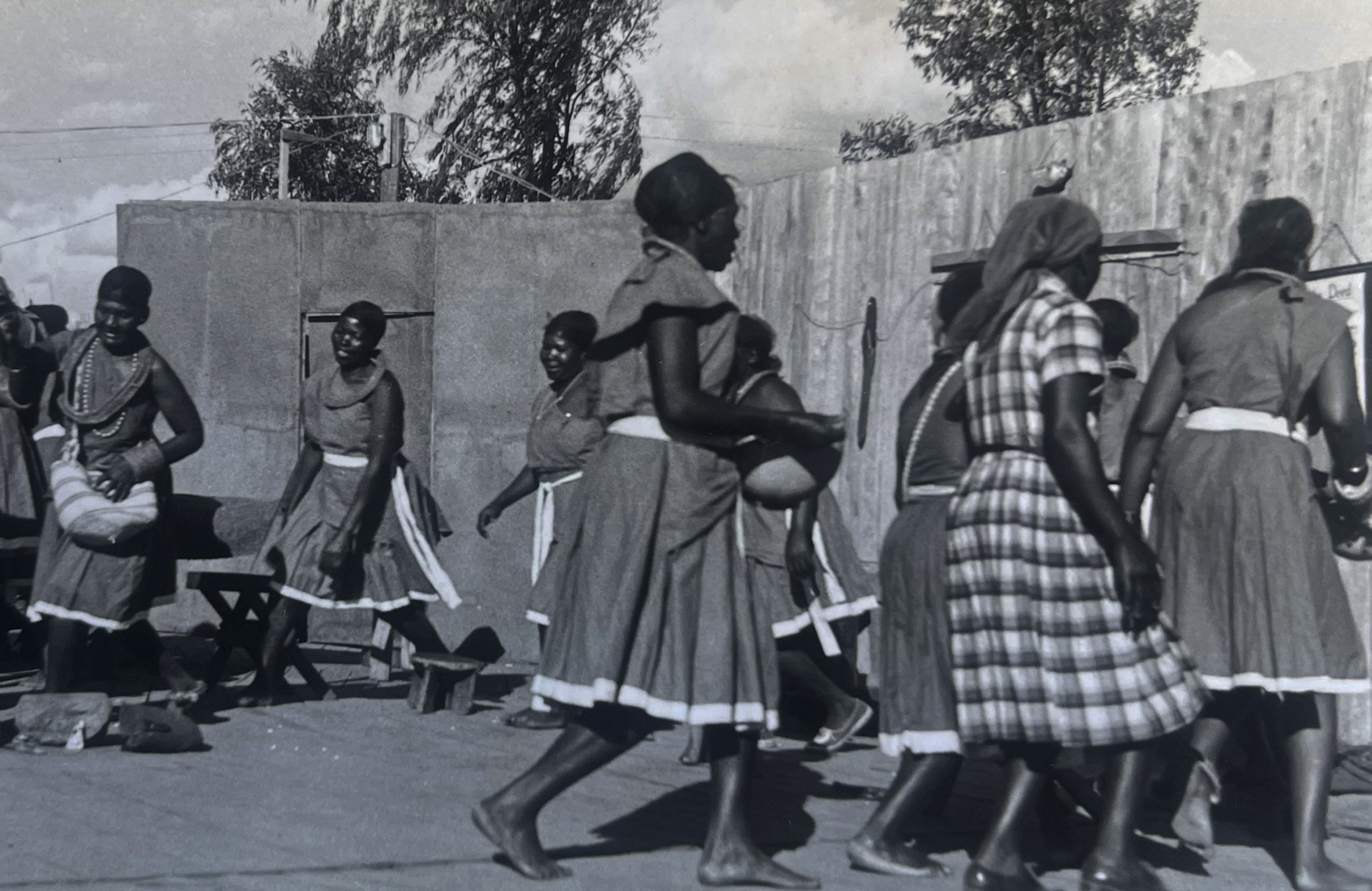
Ngaahika Ndeenda (I Will Marry When I Want), written by Ngũgĩ wa Thiong'o and Ngũgĩ wa Mĩrĩĩ, being performed in 1977 at the Kamĩrĩĩthũ Community Education and Cultural Centre (Photo Credit: Sultan Somjee, courtesy of Lucy Wangui Ng’ang’a)
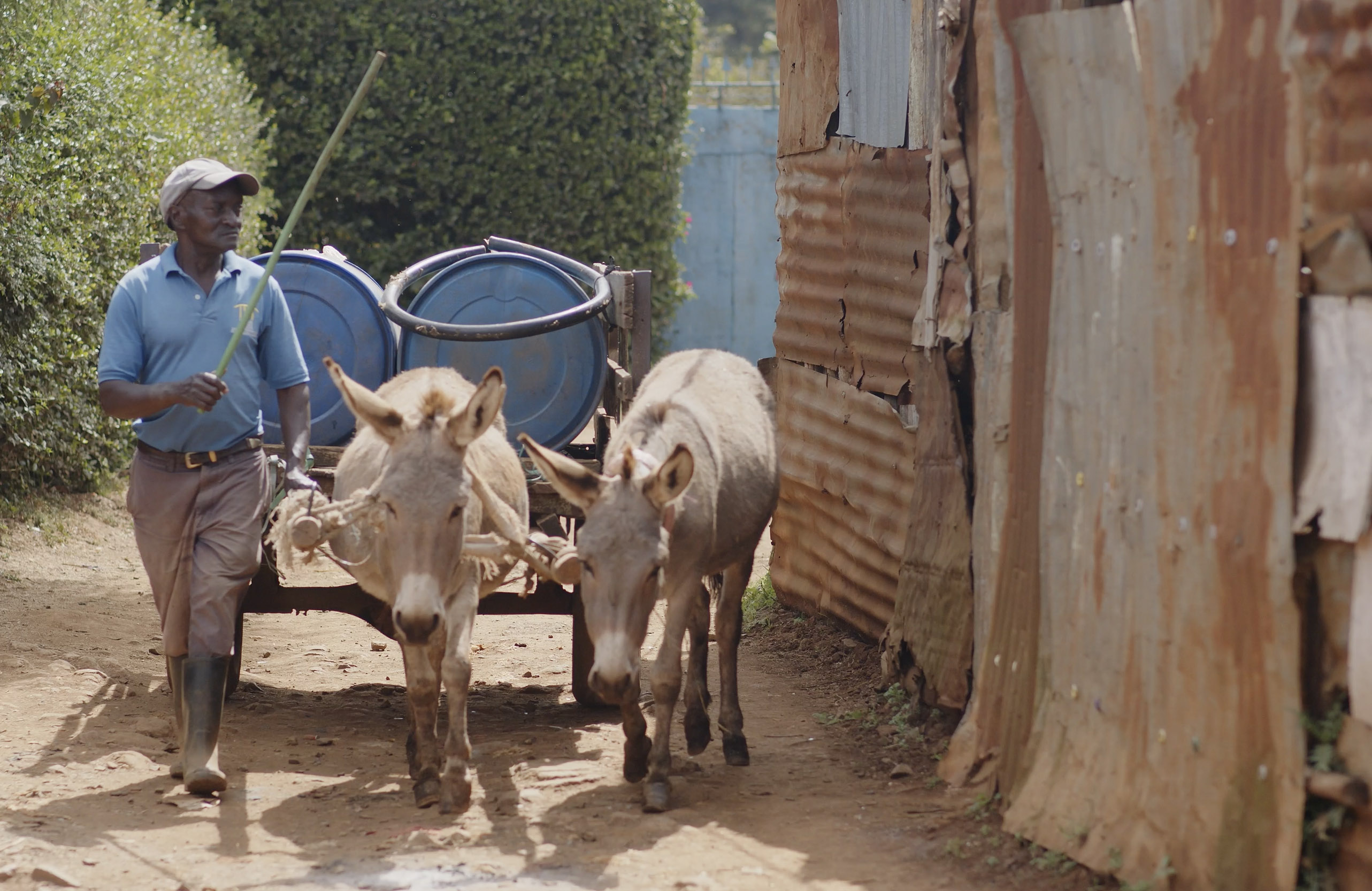 David Mbugua Kinyanjui delivering water in Kamĩrĩĩthũ (Photo credit: Bemnet Goitom, George Kinyanjui, Samuel Mugo)
In Their Words
“We built the stage from scratch with wood off-cuts… We set up benches for the audience, and the stage was ready!”
— David Njaramba Kaguura, original actor (Gĩcaamba)
“I could not wait for Sundays… First there was the food, then the attention from the young men and the audience. It was all so exhilarating.”
— Salome Njeri Njane, original actor (Gathoni)
“My mum was boasting of writing her name, Wangari. Because she used to go to the bank and only put the fingerprint… and I think there was some injustice there. You couldn’t follow up with your things.”
— Margaret Wairimu Ngũgĩ, on her mother in Ngũgĩ wa Mĩrĩĩ’s literacy class
“An African government, a post-colonial African government, puts me in a maximum security prison for… the production of a play in an African language.”
— Ngũgĩ wa Thiong’o (1938–2025), archival recording in the film
“I didn’t have to do much. The people were the designers, actually.”
— Sultan Somjee, designer of the original stage and costumes
“It is like you cut the tree, and out sprout forty-seven new saplings.”
— Dr. Kawive Wambua, on the banning of the theatre
“Everybody hears Ngũgĩ, and they automatically finish for themselves: Ngũgĩ wa Thiong’o… Ngũgĩ wa Mĩrĩĩ is not as well recognized as I would like him to be.”
— Margaret Wairimu Ngũgĩ, on her late husband and co-author Ngũgĩ wa Mĩrĩĩ
“I gave it my all, and although I was very young, I did my best to demonstrate to girls my age that they shouldn’t let men toy with them.”
— Salome Njeri Njane, answering the new Gathoni, Laurin Okonya, in the film
“The Social Justice Centres Travelling Theatre played a very critical role in mobilising… and on 25 June, when we finally occupied the Parliament, it was a headline that hit the whole world.”
— Anthony “Mayor” Otieno, director, Social Justice Centres Travelling Theatre
“History is a potent weapon. When we understand where we are coming from, it becomes very easy to know where we’re going.”
— Wanjira Wanjiru, social justice activist, Nairobi
“We are still being oppressed. We staged the play in 1977… Now look at what the Gen Z did. They stood up and said: “Enough is enough!””
— David Njaramba Kaguura
Full Synopsis
Kamirithu (Kamĩrĩĩthũ), near Limuru in Kenya’s central highlands, was born as a British “Emergency village”: a forced relocation camp built in the 1950s to crush the Mau Mau anti-colonial uprising. Its people were dispossessed by the settlers who seized the highlands for tea and coffee plantations. Kenya’s first independent government then told them to buy back their own land.
The theatre grew out of an adult literacy class that Ngũgĩ wa Mĩrĩĩ ran in a colonial-era shack at the center of the village. Within a year, the villagers had built the theatre with their own hands and premiered Ngaahika Ndeenda, which wa Mĩrĩĩ and the novelist and professor Ngũgĩ wa Thiong’o wrote for them. The play staged what everyone knew from their own lives. A salary, the factory worker Gĩcaamba says, “cannot give you back the lost strength in your arms.” Chemical runoff from the factory was corroding the iron roofs of people’s houses and affecting their health. If a performance was scheduled for 2pm, the theatre was full by 10am. The government banned the play and detained wa Thiong’o without trial. The group’s second play was refused a license in 1982, both authors were forced into exile, and security forces razed the theatre to the ground. The government then built a polytechnic on its site. Both authors died far from Kamĩrĩĩthũ, wa Mĩrĩĩ in Zimbabwe in 2008 and wa Thiong’o in the United States in 2025.
Kamĩrĩĩthũ Afterlives hands the story back to the people who lived it. Salome Njeri Njane, who grew up in a squatter settlement, was the original Gathoni, the defiant daughter whose declaration gives the play its title. David Njaramba Kaguura, born in colonial detention in 1952, played the revolutionary Gĩcaamba. Margaret Wairimu Ngũgĩ, widow of Ngũgĩ wa Mĩrĩĩ, watched her own mother learn to write her name in his literacy class before following him into Zimbabwean exile. Wangari Hinga, born in 1936, survived forced villagization and became a dancer in the play. Sultan Somjee led the collaborative design process with a matchbox and matchsticks.
Interwoven with their testimony, young performers of the Social Justice Centres Travelling Theatre rehearse the banned play in front of its original cast. They are activists from Mathare and Dandora, settlements Nairobi has treated as disposable since colonial times, and had already carried the play's questions into the streets in 2024, when protesters occupied Kenya's parliament. At once a close portrait of a community and an inquiry into political arts, the film traces Kamĩrĩĩthũ’s legacy into today’s challenges: land grabbing, toxic industry, precarious labor, state and gender violence. For its protagonists, old and young, African independence is not a closed past but an unfinished project.
 The colonial-era tea plantations near Kamĩrĩĩthũ (Photo credit: Bemnet Goitom, George Kinyanjui, Samuel Mugo)
 Lucy Wangui Ng’ang’a and Wangari Hinga reminiscing over family photos (Photo credit: Bemnet Goitom, George Kinyanjui, Samuel Mugo)
The Protagonists of the Film
David Njaramba Kaguura: Born in colonial detention, he played Gĩcaamba, the play’s revolutionary factory worker, and helped build the original stage.
Salome Njeri Njane: Born 1959 in a squatter settlement, she is the original Gathoni, the defiant daughter whose declaration gives the play its title.
Wangari Hinga: Born in 1936 and forcibly displaced with her family, she joined the theatre out of her experience of servitude under colonial rule.
Lucy Wangui Ng’ang’a: Born in 1948 to a family made landless by British colonialism, she played Njoki, the wife of Gĩcaamba. The theatre taught her that independence must include the liberation of women.
Margaret Wairimu Ngũgĩ: Widow of co-author Ngũgĩ wa Mĩrĩĩ. Her mother learned to read in his literacy classes and she joined the group’s second play, Maitũ Njugĩra (Mother Sing for Me). After the 1982 crackdown the couple fled to Zimbabwe, where they built up the country’s community theatre movement.
George Kabonyi: His father was detained by the British; his mother died in a resettlement camp. He joined the theatre in 1977, playing the revolutionary leader Dedan Kimathi.
Geoffrey Mbothu Wachira: Born in 1956, he played Kĩoi, the wealthy businessman who professes Christianity while betraying his own people.
Sultan Somjee: Ethnographer and designer, born in Nairobi, he designed the costumes and co-designed the theatre with craftspeople from the village.
The Social Justice Centres Travelling Theatre: The group of young performers and activists who reenacted Ngaahika Ndeenda in Dandora in January 2025 for the original actors.
Anthony “Mayor” Otieno: Director of the Social Justice Centres Travelling Theatre, born in Dandora, Nairobi.
Wanjira Wanjiru: Social justice activist, Nairobi.
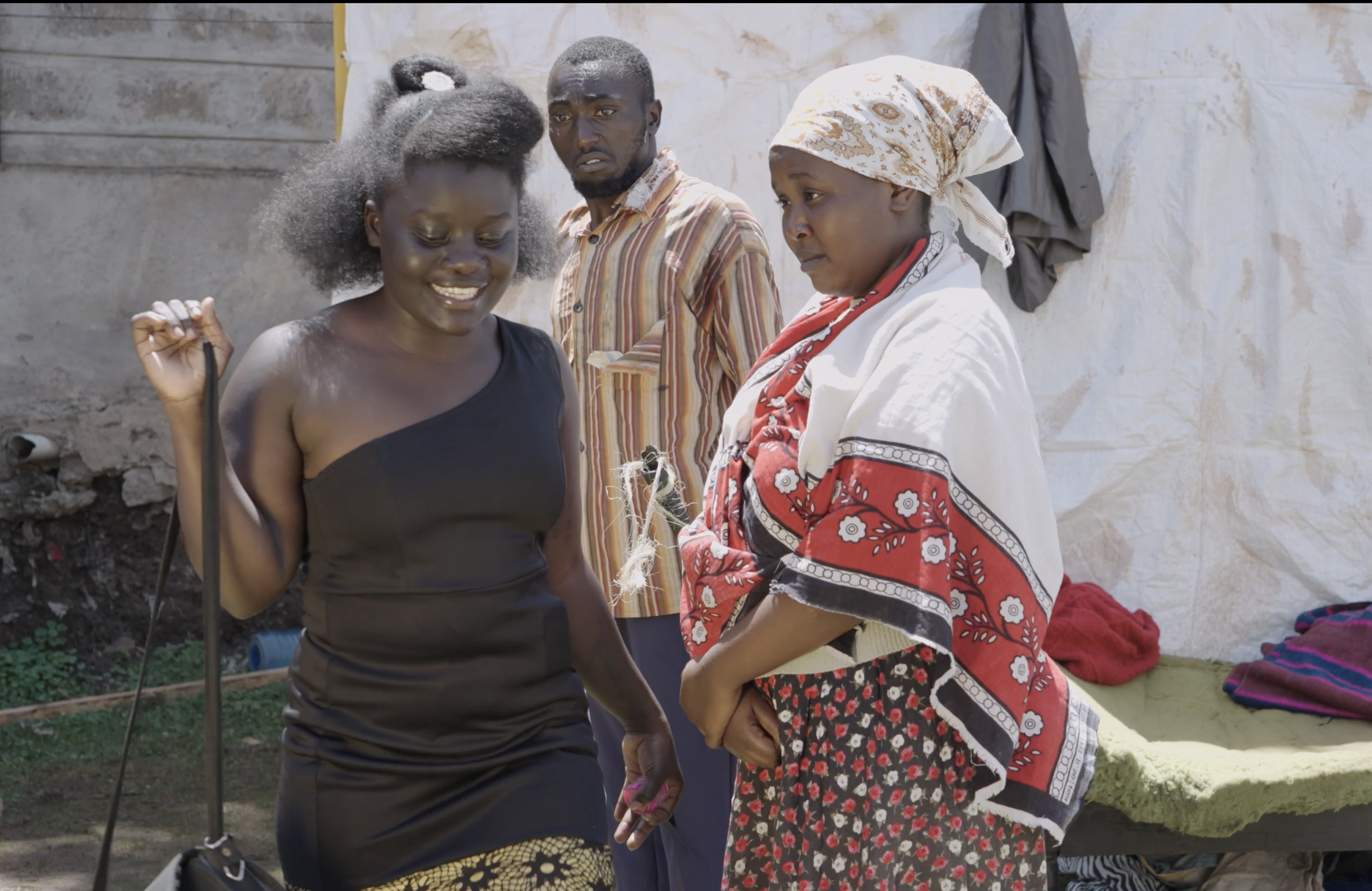 Laurin Okonya (Gathoni), Ann Wanjiku (Wangeci), and Kennedy Mbogo Ngechu (Kĩgũũnda) from the Social Justice Centres Travelling Theatre reenacting Ngaahika Ndeenda (I Will Marry When I Want), written by Ngũgĩ wa Thiong'o and Ngũgĩ wa Mĩrĩĩ (Photo credit: Bemnet Goitom, George Kinyanjui, Samuel Mugo)
Filmmakers’ Statement
The world knows Kamĩrĩĩthũ through the world-famous writer Ngũgĩ wa Thiong’o: through his imprisonment and his own accounts of it. It has never heard the story from the people who built the stage and stood on it. This film exists to correct that. It also restores the theatre’s second author, Ngũgĩ wa Mĩrĩĩ, the community educator whose literacy classes started everything and who carried the spirit of Kamirithu into the building of a people’s theatre movement in Zimbabwe, but whose work was eclipsed by the fame of his collaborator. The film is dedicated to both Ngũgĩs and to all the actors of Kamĩrĩĩthũ. Ngũgĩ wa Thiong’o gave the project his blessing before his death in 2025.
Before production began in January 2025, Kenny Cupers and Makau Kitata spent years researching through workshops, life-story interviews, reenactments, walks with the actors through the former site and surrounding areas, photographic documentation, and a community archive built with the actors and their families. The film was developed together with them and includes their performance, testimony, and family photographs, as well as archival material never before accessible. Filming in and around an architectural object lost to history, Kamĩrĩĩthũ Afterlives portrays intergenerational encounter and collective reflection, inviting audiences to consider how suppressed histories return as tools for imagining futures.
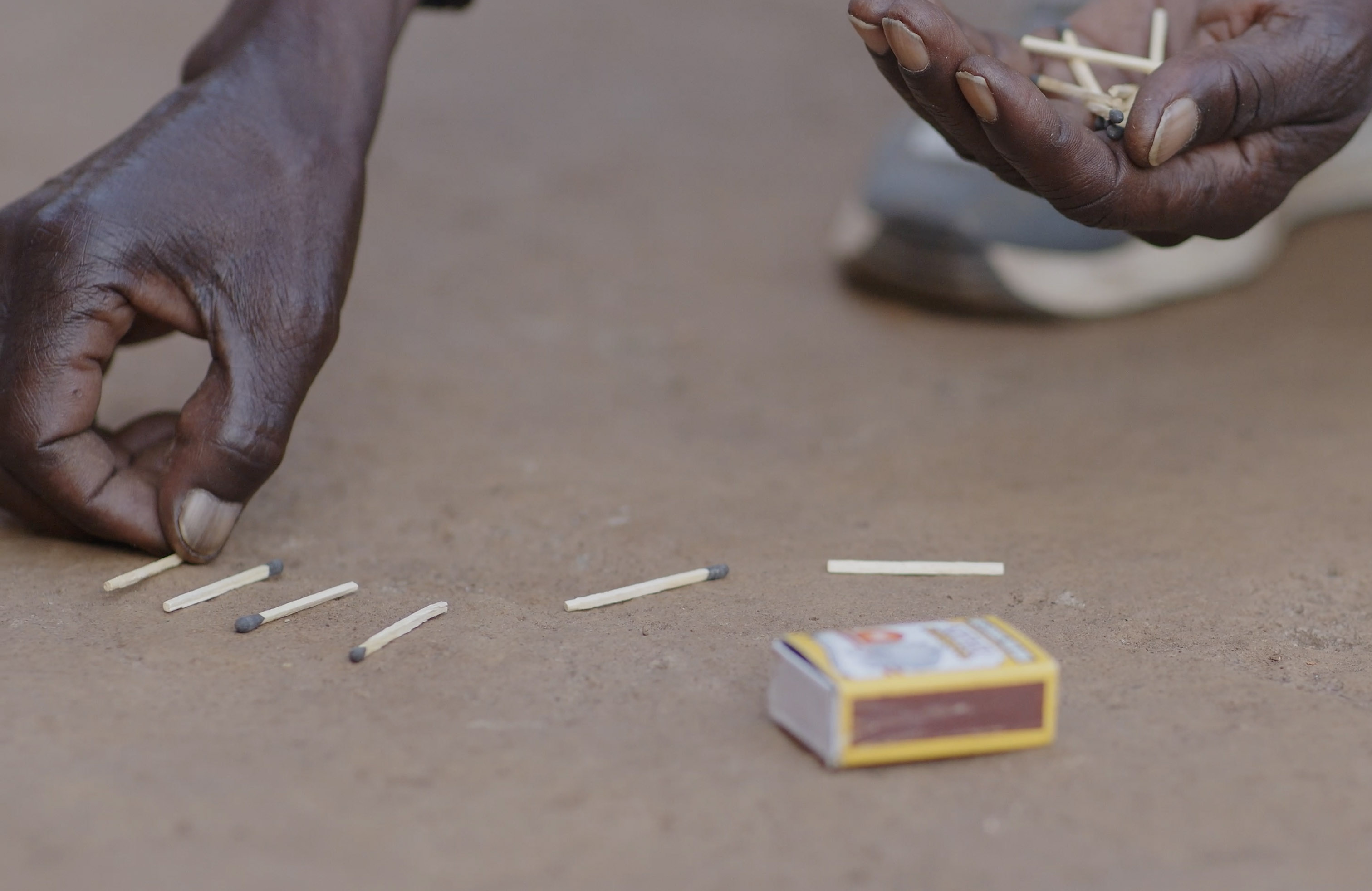 David Njaramba Kaguura explaining the design and construction of the theatre using a matchbox and matchsticks, following the process initially set out by Sultan Somjee (Photo credit: Bemnet Goitom, George Kinyanjui, Samuel Mugo)
Geoffrey Mbothu Wachira playing Kĩoi next to Ikuua in 1977 (Photo credit: Sultan Somjee, courtesy of Geoffrey Mbothu Wachira)
︎︎
Featuring: David Njaramba Kaguura, Lucy Wangui Ng’ang’a, Salome Njeri Njane, Wangari Hinga, Margaret Wairimu Ngũgĩ, Geoffrey Mbothu Wachira, Fred Karanja, George Kabonyi, David Mbugua Kinyanjui, Wanjira Wanjiru, Dr. Sultan Somjee, Dr. Kimani Gecau, Dr. Kawive Wambua, Dr. Kenneth Ombongi
The Social Justice Centres Travelling Theatre: Samuel Ochieng (Gĩcaamba), Laurin Okonya (Gathoni), Ann Wanjiku (Wangeci), Kennedy Mbogo Ngechu (Kĩgũũnda), Peter Victor Ndolo (Kĩoi), Michelle Blessing Franklyne (Njooki), Mercy Mutheu Ngala (Helen), Newton Ouma Ombaka (Ndugĩre), Wilfred Kuya (Ikuua), Diana Kinyua (Jezebel), Said Hassan (waiter), Kennedy Kimani (watchman)
Directors: Alexandria Majalla, Kenny Cupers
Associate director: Makau Kitata
Producers: Alexandria Majalla (Baobab Frame Productions), Kenny Cupers, Makau Kitata
Script: Kenny Cupers, Alexandria Majalla
Research & concept: Kenny Cupers, Makau Kitata
Community liaison: Makau Kitata, Kenny Cupers
Camerawork: Bemnet Goitom, George Kinyanjui, Samuel Mugo
Editors: Brian Fairbairn, Nduati Mambo, Bemnet Goitom, Simon Quack
Associate Editors: Cliff Kotange, Samuel Mugo
Production Sound Mixing: Brian Fairbairn, George Kinyanjui, Bemnet Goitom, Nduati Mambo
Sound Mix: Johannes Tuchelt
Sound Postproduction Facility: Filmsound Lab (Julian Cropp)
Production Assistants:Hassan Masika, Peter Mulandi Kiamba, Brenda Muthoni Wamburu
Social Justice Centres Travelling Theatre: Technical Team: Christine Mary, Elizabeth Ochieng, Stage Directors: Anthony Otieno, Davis Tafari, Secretariat: Minoo Kyaa, Brian Mathenge, Literary Advisor: Makau Kitata
Translations: Sarah Nduta Wangaruro
Financial support: Swiss National Science Foundation (research)
University of Basel (production & postproduction)
Archival Material: Ngũgĩ wa Thiong'o Collection (Lilly Library, Indiana University, Bloomington, Indiana, USA), Kenya National Archives, The National Archives of the United Kingdom, British Pathé & Reuters, McMillan Memorial Library (Nairobi), Goethe-Institut (Nairobi), Bata Information Centre of Tomas Bata University in Zlín (Czech Republic), Private Collection of Margaret Wairimu Ngũgĩ, Private Collection of Dr. Sultan Somjee, Private Collection of David Njaramba Kaguura, Private Collection of George Kabonyi, Private Collection of Lucy Wangui Ng’ang’a, Private Collection of Salome Njeri Njane, Private Collection of Wangari Hinga, Private Collection of David Mbugua Kinyanjui, Basler Afrika Bibliographien (Basel), Kenya Railway Museum (Nairobi), Ukombozi Library (Nairobi), University of Cape Town Libraries (Kenya Colony map, 1943), Nationaal Archief, the Netherlands (Daniel arap Moi portrait by Rob C. Croes / Anefo, 1979), National Photo Collection of Israel (Jomo Kenyatta photograph, 1966), Wikimedia Commons (Tarril.h photo of Kenyatta statue), Allan Hailstone, Ramadhan Khamis
Music: Songs from “Maitũ Njugĩra – A Play by Ngũgĩ wa Thiong'o,” 1982 (Goethe-Institut, recording courtesy of Ramadhan Khamis); “Mwiku Mwiku” sung by Njaramba Kaguura, recorded by Gitonga Mwangi, and produced by Joe-Collins Karuku; “Kibuthi,” by Kangema Urban Gitiro Women Group. Artists: Gitiro, Ndumocya Iritu and Kibuthi (Courtesy of The Singing Wells Project / Abubilla Music); licensed tracks from PremiumBeat.
Media: Excerpts from KTN News, KBC News, One Vibe Africa, TRT World News and K24TV News, used under fair use for brief historical reporting.
Proceeds: This is a non-profit production. In accordance with the release agreements signed with the protagonists, all profits will be donated to organizations for social and environmental justice, with priority to Kamirithu CBO. Established on 5 June 2023, this community-based organization aims to reactivate the Kamĩrĩĩthũ communal spirit and heritage and support struggles and debates about social and environmental justice, using transformative theatre and other creative approaches for awareness of injustice and to build spaces for reflection and empowerment.